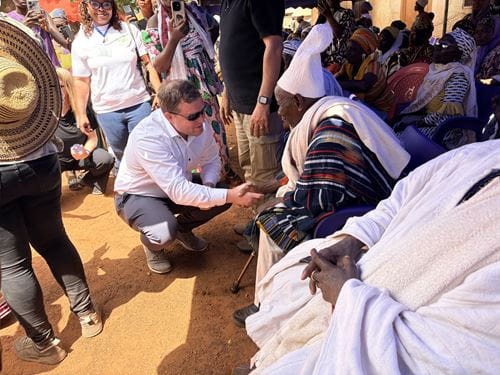
A team of Bunge leaders recently traveled to rural communities in Northern Ghana to connect directly with the hardworking women and farmers who drive the company’s shea supply chain.
More than a routine visit, the trip was an opportunity to strengthen relationships, listen and learn, and reinforce Bunge’s commitment to long-term, positive social impact in the communities where it operates.
Agriculture and community partnerships are the backbone of Bunge’s shea business. During the trip, Brett Caplice, SVP Tropical Oils & Food Solutions; Julie Hawkins, Sr. Deputy General Counsel; Kristy Kelly, Director Commercial Finance EMEA Food Solutions; and Laura de Gruijter, Manager Social Impact EMEA, joined the Bunge team in Ghana to tour local shea parklands and meet directly with community members.
In open, grassroots community gatherings known as “Durbars,” the leaders sat beneath the shade of large trees with Shea Women’s Cooperatives, whose members are responsible for the meticulous picking, cracking, and processing of Bunge’s shea kernels. They also met with community leaders and local authorities.
“These interactions serve to build trust, ensuring that the women who anchor the Shea sector know they are valued by our company and seen as equal partners in a global business environment,” explains Barbara Macon, Bunge’s Program Manager – Sustainability in Ghana.
Community members, especially youth, valued the open dialogue and collaboration with shea-collecting women and local leaders, noting that these conversations help build trust and encourage broader participation in the shea industry. The leadership visit reinforced Bunge’s commitment to responsible sourcing, practical solutions that support farmer productivity, and community-centered approaches built through direct collaboration with independent women-led business cooperatives.
Walking through the shea parklands and observing local processing during the first shea fruits of the season gave the Bunge team a firsthand view of how collaborative frameworks operate on the ground. These experiences provided valuable insight into the harvest, local processing dynamics, and the relationships that help strengthen transparency and fairness across the value chain—from cooperatives to end-users in the final market.
Caplice addressed the cooperative leaders, saying, “Bunge cannot work at building a first-class, ethical shea product without partnership of the women in these communities. Your success is our success.”
Through Bunge’s Direct Sourcing Initiative, part of the Shea Where Life Grows program, Bunge is supporting the development of a more transparent, traceable, and resilient shea supply chain by working directly with women-led cooperatives in West Africa. The initiative focuses on transferring skills and knowledge, strengthening local processing capabilities, and supporting women shea collectors as they build more independent, income-generating business models.
To date, Bunge has supported the establishment of ten official Independent Business Cooperatives, creating a direct relationship with Bunge that supports 100% traceability from source to supply chain. These cooperatives, which impact more than 4,000 women, receive business and quality training, income-enhancing incentives, and warehousing support. In addition, alternative income-generating activities are helping women to obtain more stable, diversified earnings throughout the year.
“At Bunge, we believe lasting impact is built through strong relationships with farmers and communities, mutual respect, and direct business connections that drive transparency, inclusion, and shared value,” said de Gruijter. “The Where Life Grows initiative demonstrates how investing in positive social impact within sourcing communities can unlock sustainable business opportunities, strengthen resilient partnerships, and help secure a responsible, long-term supply of shea.”